
Paytient’s spending data tells us the moment employees get access to out-of-pocket purchasing power for the first time,, they go straight to the care they've been putting off. First transactions are large, and medical and dental care spike immediately. This behavior isn't erratic. It's a queue, clearing.
For employees, that moment is a relief. For benefits leaders, it's a signal.
The queue forms inside the affordability gap — the distance between what coverage costs and how paychecks have grown — and the specific plan architecture. Its existence is a signal about whether that plan is working as intended. And when it clears the moment employees can actually pay, that tells you something about whether the plan was working as intended.
On paper, the high deductible health plan (HDHP) is a rational design. Lower premiums, HSA-eligible, and cost-sharing that's meant to produce more deliberate healthcare consumers. For employers, the math is sound. The problem is what happens between the plan and the point of care.
That gap comes down to a distinction most benefit strategies miss. Affordability addresses the price of care. The ability to pay addresses whether an employee can actually produce the money on the day care is needed — and that's a different problem entirely.
Most benefit strategies are built around the former. Almost none address the latter, which means that even a well-designed HDHP can produce the opposite of its intent: not a deliberate, proactive healthcare consumer, but one who defers.
Enrollment Confidence: The Win Before the First Claim
The employer benefits start before a single claim is filed.
When employees have the ability to pay, the financial exposure of a high-deductible plan stops feeling like a gamble. The question that keeps employees in a PPO — what if something expensive happens and I can't cover it? — now has an answer. That changes what people do at open enrollment.
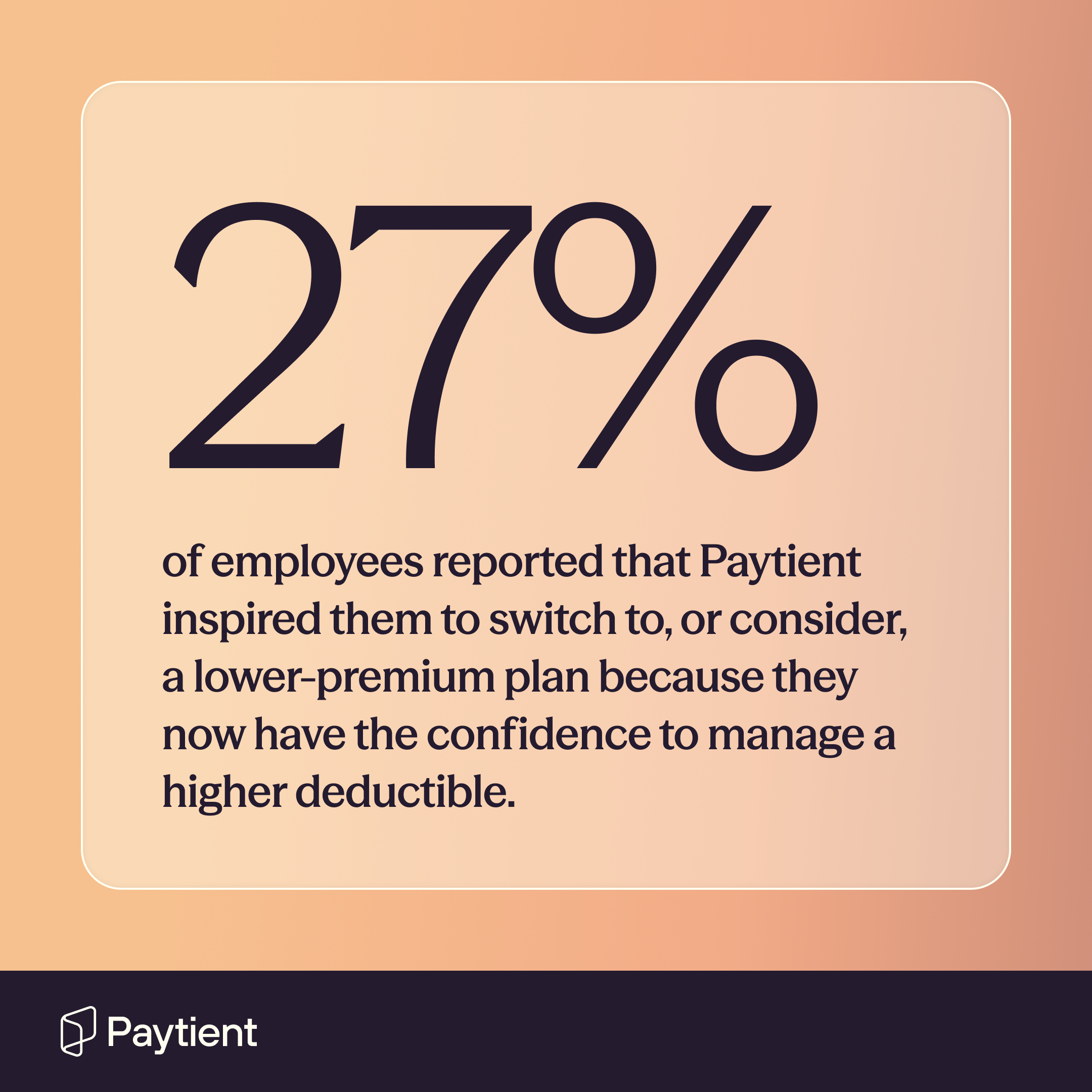
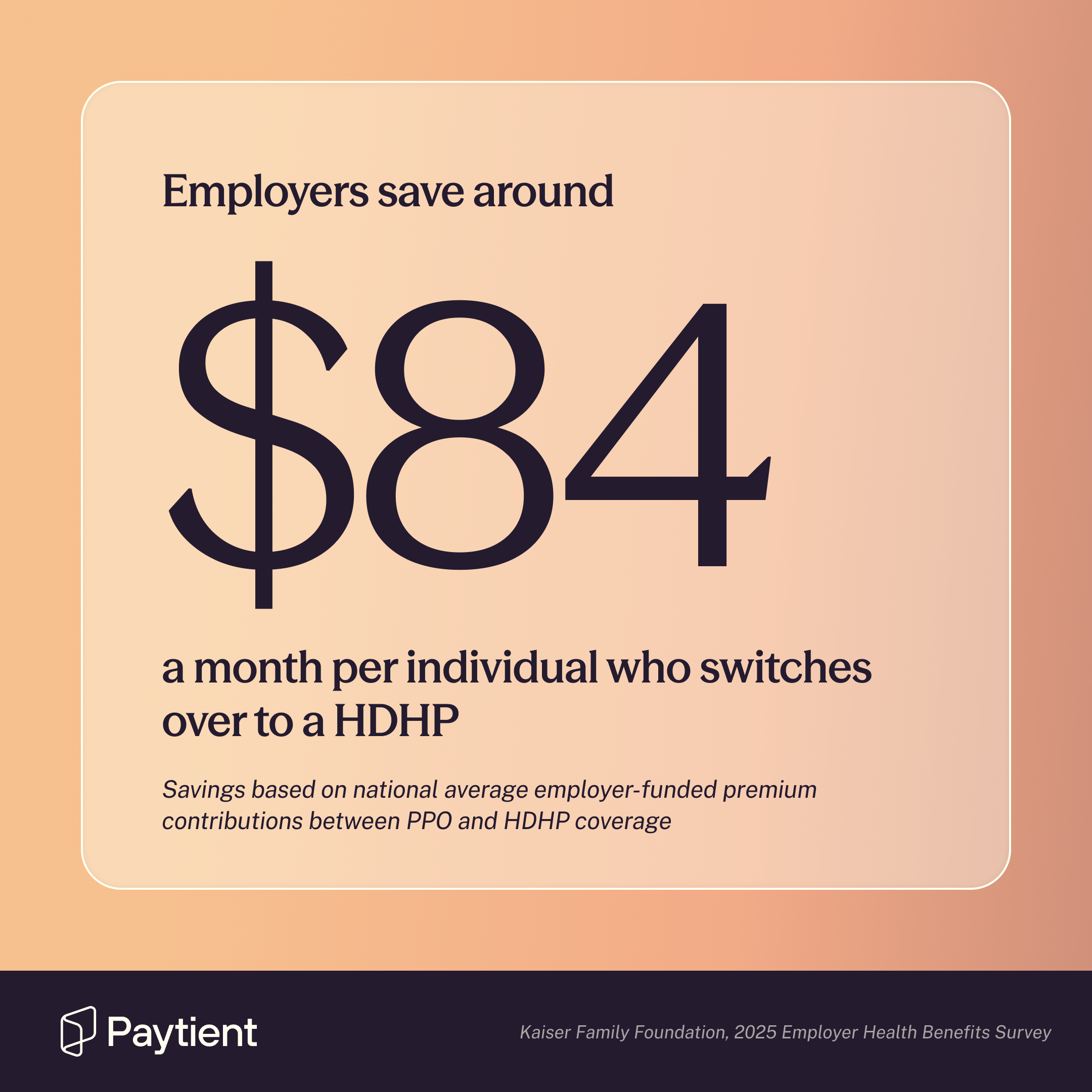
Lower-premium plan enrollment means lower employer contributions — savings that compound across every employee who makes the switch. The pattern from Paytient's client base is consistent: among employers offering Paytient alongside HDHPs, HDHP adoption has been trending upward.
Several exceeded their own 2026 targets, reporting "higher than anticipated" enrollment.
That’s the win before the first claim. What happens after enrollment is where the stakes compound.
From Deferred Care to Crisis Care: Where the Plan Really Pays
When care is delayed, conditions worsen. That’s the cost equation that never shows up in premium negotiations.
38% of patients report their health actively deteriorated while they were waiting to afford treatment. 23% developed entirely new symptoms in that window. When a manageable condition becomes an emergency intervention, that cost lands on the plan — at multiples of what early treatment would have run.
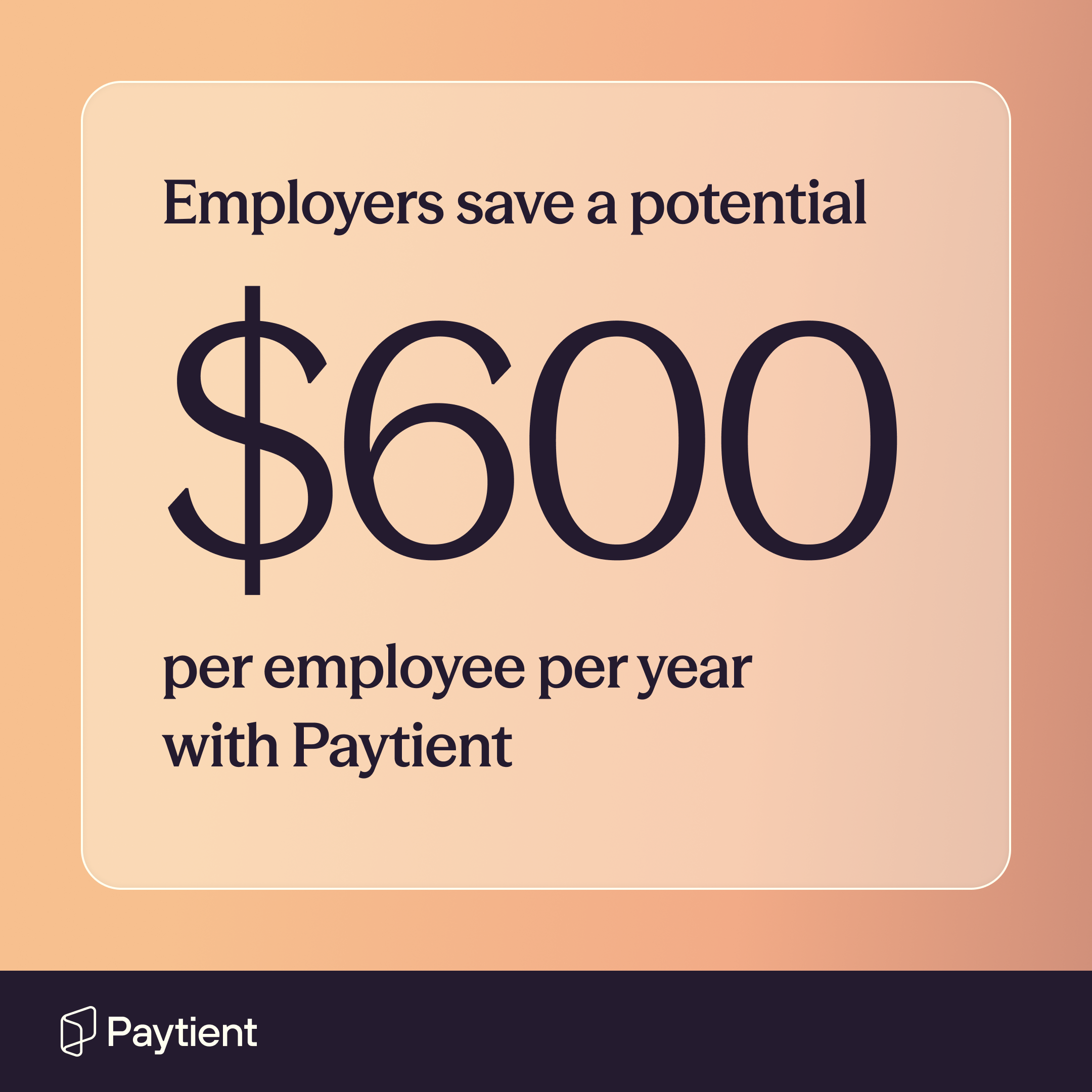
Viewed this way, the high-dollar first transactions new Paytient users make are relatively inexpensive. Employees who skip care don’t save the plan money. Conditions progress, and they eventually show up in the ER or with a far more complex diagnosis.
That's what the HDHP was designed to prevent. But it can’t do that without addressing the ability to pay.
51% of Paytient members report being more productive at work because they can pay for care when they need it. Financial stress about healthcare doesn't stay at the clinic door. It shows up in output, engagement, and retention in ways claims data will never capture
Proactive Health Behavior: The Long-Term Employer Dividend
After the initial backlog clears, spending patterns tend to stabilize, with smaller transactions, more consistent cadence, maintenance-oriented behavior. That shift from reactive to proactive is exactly what the HDHP was designed to produce.
The durable value for employers isn't the first-swipe surge. It's what comes after: a workforce managing care before conditions escalate, fewer catastrophic claims, more predictable plan spend, and a population healthy enough to show up fully.
At scale, across a full employee population, that behavioral shift is what keeps a health plan performing over time.
The Complete HDHP Strategy: Why the Ability to Pay Is the Missing Piece
The HDHP is a sound plan design. It saves on premiums, creates the right incentive structure, and gives employers a rational path to managing contributions over time.
What it was missing is the ability for employees to meet their share of the cost on the day care happens. Without it, the plan produces deferral. With it, the plan delivers on its promise: engaged, proactive healthcare consumers who manage their health before conditions become crises.
“I think Paytient can work for any industry at any level. It has financially changed how some people think about their medical care [...] it’s incredible.” - Merrillville Community School Corp




.png)