Richard Crabtree knows exactly what makes a hard day’s work worth it. Driving an 18-wheeler through Lee’s Summit, Missouri, he’s seen it all—but what he values most isn't the miles behind him; it's the team backing him up.
After years on the road, Richard says he’s finally found the best management group of his career.
The reason? He’s treated like a person, not a line item.
And his employer proved it in the most tangible way possible: they made sure he could actually pay for the care he needs.
The Real Cost of Delayed Care
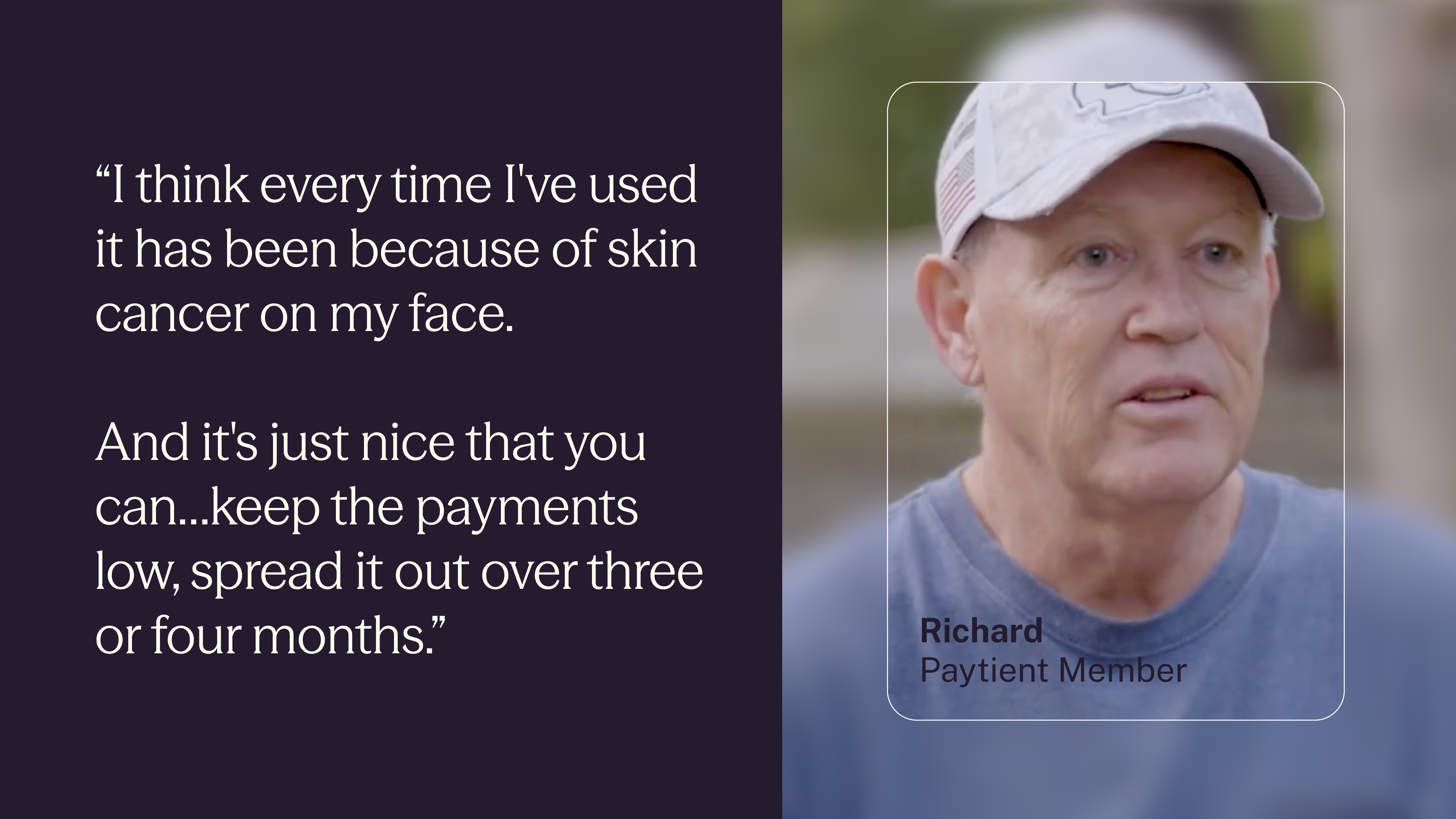
For Richard, healthcare isn't a one-time emergency; it’s a recurring necessity. Dealing with skin cancer means regular trips to the specialist—trips that, even with insurance, almost always come with an out-of-pocket cost.
When employees can’t pay out-of-pocket costs on the day care is needed, they delay. And delaying has a price. When employees delay treatment due to upfront costs, 23% develop entirely new symptoms, and 20% even resort to unregulated "home fixes" to avoid the doctor.
The downstream cost to employers is just as real. Employees lose an average of 6.3 hours of productivity every week to health-related distraction and pain. Meanwhile, the conditions driving that distraction don't wait: 38% of employees report their health actively deteriorated while they were waiting to afford treatment. A single employee skipping a $50 chronic medication refill can snowball into a $20,000 hospital stay. Multiply that across a workforce, and the math is clear: delayed care and non-adherence drain an estimated $50 billion to $140 billion from the employer market every year.
But Richard’s employer chose a different path by giving him the ability to pay for care, right when it’s needed, through Paytient.
Control, Not Crisis
Paytient gives Richard the power to handle his medical bills on his own terms. Instead of a single, stressful payment, he can spread the cost out over several months—interest-free—and repay it through simple, automatic payroll deductions.
"It’s just nice that you can do a little payment or a higher payment... keep them low, spread it out over three or four months. And it’s not that hard."
By breaking these costs into manageable pieces, the "crisis" of a medical bill disappears. Richard doesn't have to worry about his finances while he's behind the wheel; he just focuses on the road.
More Than a Benefit — A Movement
This is what happens when healthcare actually works for the patient. When employees have the ability to pay their share of care the moment it's needed—everyone wins:
- Richard gets the recurring treatments he needs without the financial stress.
- Richard’s providers are paid in full and on time.
- Richard's employer earns the benefit of a more engaged workforce.
Richard says he "can't thank them enough."
It’s a simple sentiment, but it represents a massive shift. When we give people the power to choose their care without financial fear, we don’t just offer a benefit—we start a movement toward a Better Care Economy.
Download the report
Paytient’s Employee Healthcare Affordability Report