Healthcare your crew can actually afford.
40% of Americans with employer insurance still defer care because they can't afford the deductible
Whether you're a shop that offers nothing, one that offers medical but not dental or vision, or one with a full plan and an HDHP deductible — Paytient closes the gap to healthcare affordability.

Job shops, fabricators, production floors — anyone with hourly crews and tight margins.


Most manufacturing employers are in one of three coverage situations. Paytient works for all of them.
Why this matters more in a shop than anywhere else.
Employers are making healthcare more affordable with Paytient.
One welder staying covers the program for years.
Replacing one hourly manufacturing worker costs $20,000–$40,000 when you count lost output, overtime backfill, recruiting, and ramp-up time. For a 20-person shop at the industry-average 28% turnover rate, that's 5–6 departures per year — a potential annual drag of $100,000–$175,000 before a day's production is counted.
A 30-person shop on Paytient's Essential plan pays $4,800/year, all-in. If Paytient keeps one person from leaving over a medical bill, the program pays for itself for the next 7 years.
Sources: FirstHR 2026 Manufacturing Benchmarks, BLS JOLTS, Wellhub/Gallup
Manufacturing is growing. You need workers to stay to capture it.
In 2024, U.S. reshoring and FDI generated 244,000 job announcements. CHIPS Act, Infrastructure Act, and tariff policy are driving domestic production incentives. 3.8 million new manufacturing workers will be needed by 2033. Small contract manufacturers are the primary beneficiaries — but only if they can hold onto the workers they already have. The manufacturers who can stabilize their workforce will win the contracts reshoring creates.
Sources: Reshoring Initiative 2024, Deloitte/Mfg. Institute 2024

Delayed care turns sprains into surgeries.
A machinist tweaks his back on Tuesday. Deductible is $2,631, so he doesn't go to the doctor — he muscles through. Two weeks later it's a herniated disc, and now it's a comp claim that puts him out for 8 weeks.
A 2025 JAMA study found that adults on HDHPs were less likely to receive guideline-recommended care across visits, labs, and medications. 80% of Paytient members say they used their HPA to get care they had been delaying. 50% report higher workplace productivity. Early visits = fewer claims that snowball into your loss ratio.
Your workers lose 7 hours a week to financial stress. You just can't see it.
59% of employees are currently stressed about their finances. 53% have less than $5,000 in emergency savings. Financial stress costs U.S. employers an estimated $183 billion annually in lost productivity.
In manufacturing, that lost productivity is a missed quota, a quality error, or a machinist who calls in Monday because a $900 ER bill arrived Friday.
Sources: PwC 2026 Financial Wellness Survey, BrightPlan 2024
You do — and that's exactly why this works.
Paytient pairs with the plan you already have. Whether your team is on a HDHP, a PPO, an HMO, an HRA, or an HSA-qualified plan, the Paytient card fills the gap that insurance leaves behind. You keep your broker. You keep your carrier. You keep your renewal cycle. You add an HPA.
The worker who has "full benefits" at a 10–49 employee manufacturer often has a medical card that won't cover anything until they've spent $2,631 out of pocket — and likely no dental, no vision, and a pharmacy benefit that is functionally unavailable until that deductible is met. Paytient does not replace any layer of that system. It funds the gap that every layer leaves open.
Small-group premiums are rising 11% in 2026. ACA subsidies are expiring.
The small-group market is deteriorating as healthier employers exit for alternative arrangements, leaving sicker risk pools and higher premiums for those who remain. Meanwhile, the enhanced ACA subsidies that have cushioned workers at non-offering employers are expiring — with individual market premiums projected to rise 75%+. NFIB reports that 98% of small employers offering insurance believe cost will become unsustainable within 5–10 years.
Paytient doesn't fix the premium problem. It addresses the downstream consequence — a workforce that has coverage on paper but can't afford to use it.
Sources: Peterson-KFF 2025, American Academy of Actuaries 2024, NFIB, KFF 2025
Setup takes as little as 15 minutes.
You don't need an HR department to run this. You don't need to add another vendor to your ops stack. No dedicated HR function? Most 10–49 employee manufacturers don't have one — benefits decisions are made by owners, operations managers, or accidental HR generalists. Paytient is designed for exactly this environment. Sign up at paytient.com/pricing, upload your roster, hand out cards. Done.

How Paytient works.
Employees use their Paytient card at any healthcare service or store where Visa® is accepted.

Step 1
Employee gets care.

Step 2
Employee swipes Paytient card or taps wallet.

Step 3
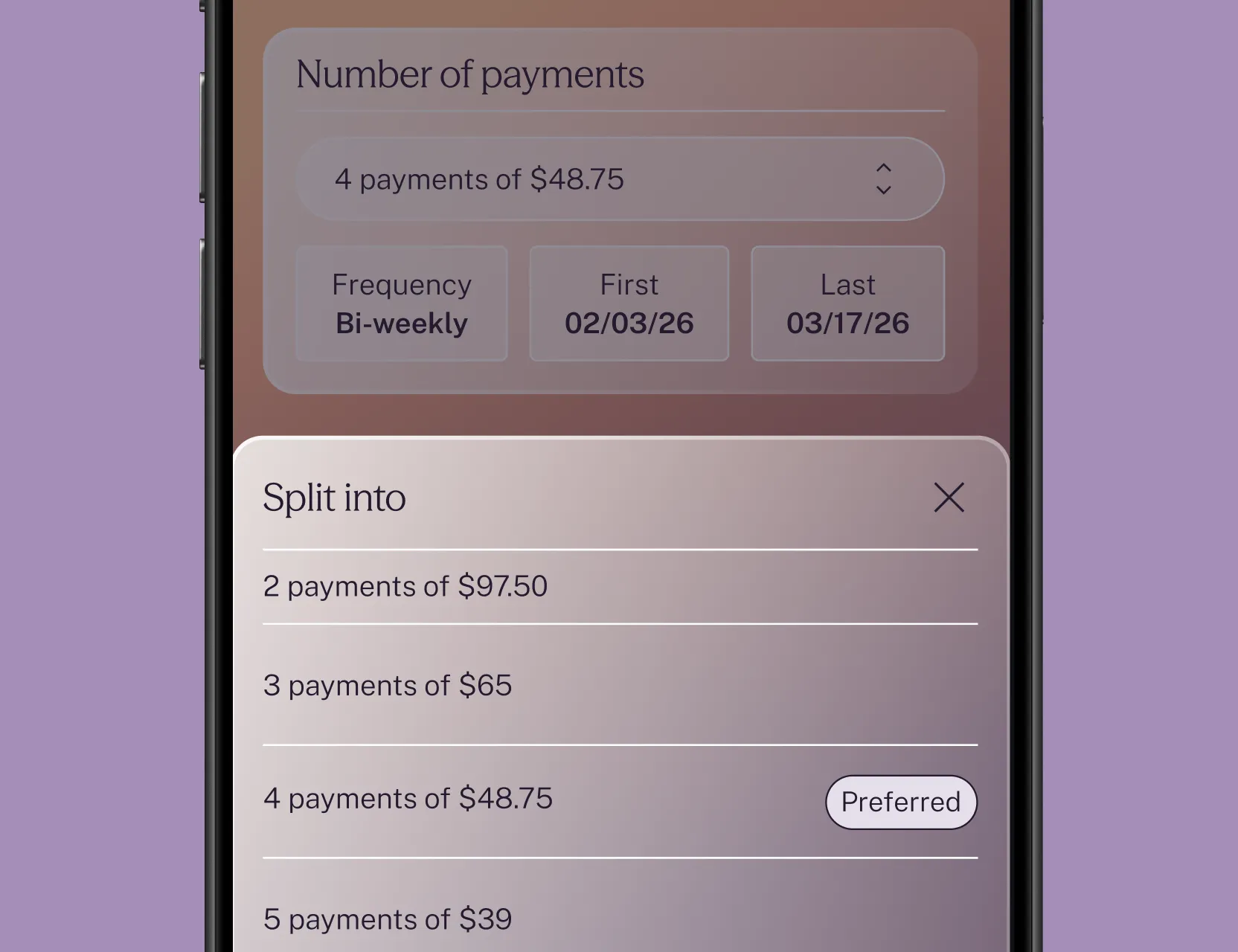
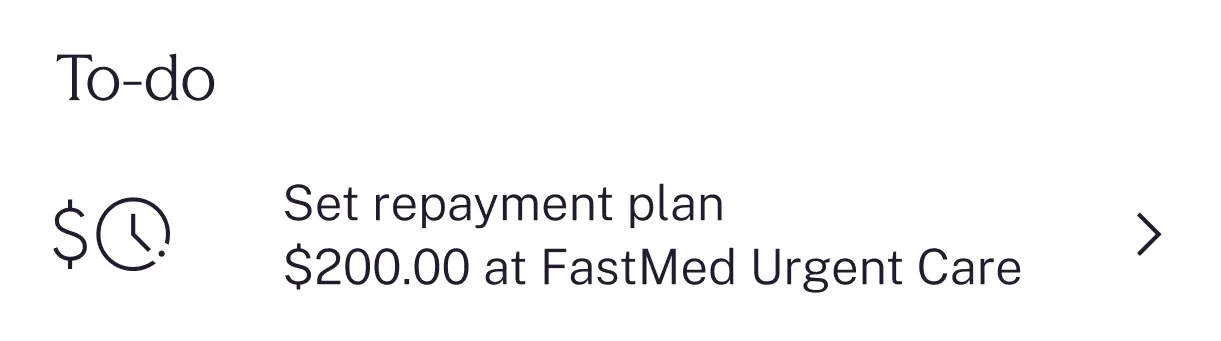
Employee chooses a repayment plan to fit their budget.
Paytient is an affordability solution.
It makes it possible for your workforce to pay for healthcare they need but can't pay for right now. It is not a replacement for a health plan.
A large employer offering a $0-deductible plan with full dental, vision, and pharmacy is offering something genuinely better. We're not pretending otherwise. What Paytient offers is the most impactful thing available at your size and cost structure.
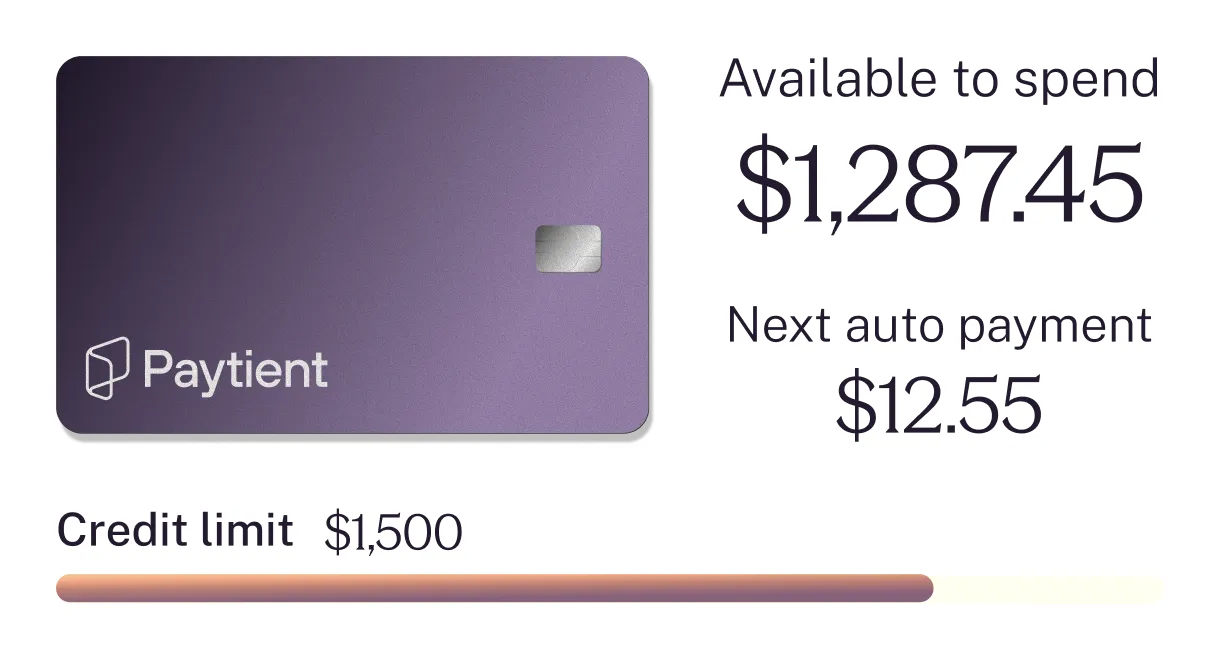
Paytient makes it easier for your employees to pay for their healthcare – medical, dental, vision, prescriptions, and even veterinary.


0%lower 12-month turnover among employees using Paytient.
0%of insured Americans skipped care due to cost last year. Paytient closes that gap.
0%of members used HPA to access care they had been delaying.
0%report increased workplace productivity.
$0-0kannual turnover drag at a 20-person shop. Paytient costs a fraction of one departure.
☆0/5on TrustPilot w/5k+ reviews.
Plans that fit a shop, not an enterprise.
Buy Online
Essential
Help your employees cover everyday costs for routine and preventative care.
Healthcare purchasing power
$2,000
Cost per employee
$10/mo
Monthly platform fee
$100/mo

Buy Online
Plus
Help your employees cover larger costs for major medical and specialist care.
Healthcare purchasing power
$5,000
Cost per employee
$18/mo
Monthly platform fee
$100/mo

Talk to Sales
Flexible care for the shop floor.
Paytient pricing is straightforward: you pay a monthly fee per eligible employee, and your team gets instant access and can use funds immediately.
Still have questions?
Connect with our sales team.
All Paytient plans come with:
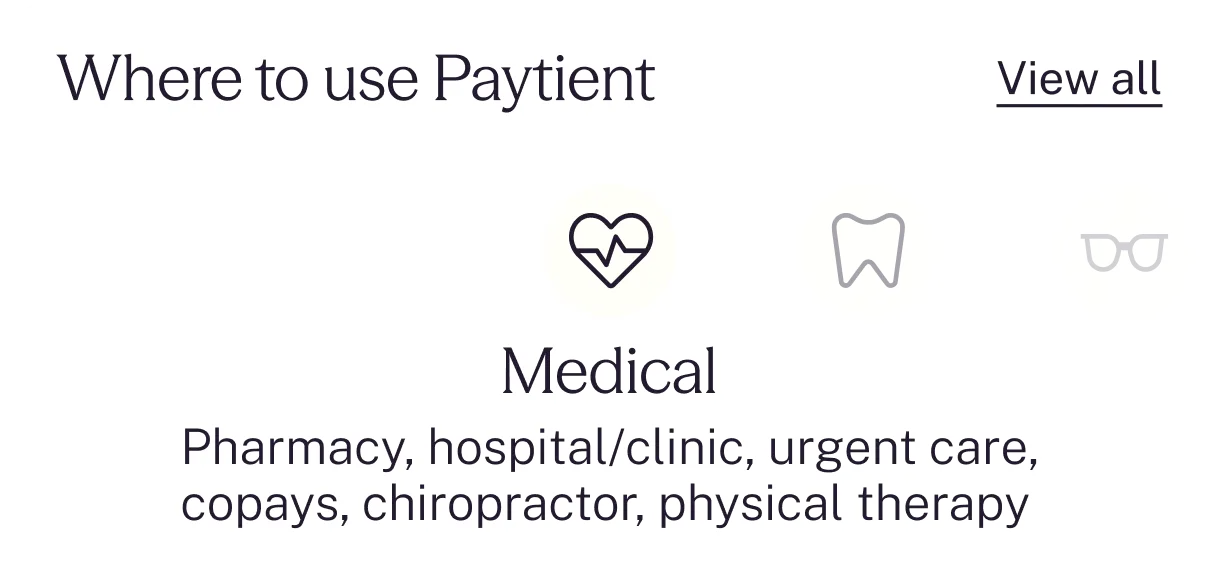
Medical, dental, vision, pharmacy, and veterinary care.
No interest, no fees. Ever.
Flexible repayments.
FAQs
Get answers to common (but key) questions about Paytient.
Is Paytient health insurance?
No. Paytient is an affordability solution that you add on top of your existing benefits. Paytient provides employees with a more flexible way to pay for healthcare over time — always without interest or fees. The Paytient Visa® card lets your employees pay upfront expenses for medical, dental, vision, pharmacy, and vet care. They then choose a payment plan that fits their budget and repay those costs over time at 0% interest through payroll deduction. You keep your current carrier, plan, and broker.
How does Paytient work for a small manufacturer?
You sign up at paytient.com/pricing, upload your employee roster, and we send each person a Paytient Visa® card with up to $5,000 in interest-free purchasing power. They use the card at the time of service. Repayment happens automatically through payroll deduction over the term they choose. Setup takes about 15 minutes. No plan redesign required. Most shops in the 10–49 employee range have employees actively using the card within 5–7 business days of signup.
Will my insurance broker be upset?
No, Paytient is not a competitor to your broker or carrier. We pair with whatever plan they've already designed for you. Many brokers actively recommend Paytient to their manufacturing clients because it makes the underlying plan more usable, which improves renewal retention. If your broker has questions, send them to paytient.com/consultants.
My team is hourly and a lot of them have rough credit. Can they qualify?
Yes. There is no required credit check for the Paytient card. Eligibility is based on employment, not credit history. This is the single most important reason Paytient works for shop crews when other financing options don't.
What can the Paytient card pay for?
Any qualified medical expense your employee owes out of pocket: deductibles, copays, prescriptions, dental work (cleanings, fillings, crowns, braces), vision (exams, glasses, contacts, LASIK), specialist visits, mental health, even veterinary care. The card works with providers that accept Visa®.
What happens if an employee leaves my company before they've finished repaying?
Repayment continues directly between the employee and Paytient — it doesn't become your problem. You're not on the hook for unpaid balances if someone quits or is terminated.
Will this affect my workers' comp loss ratio?
Indirectly, yes — and in your favor. When employees can afford to address musculoskeletal issues early (PT, urgent care, imaging) instead of waiting until something becomes serious, fewer issues end up as comp claims. 78% of Paytient members report using the card to access care they had previously delayed.
We're under 50 employees — do we even need to offer benefits?
Legally, companies under 50 FTEs have no ACA employer mandate to offer health insurance. But "no legal obligation" doesn't mean "no business need." At a 28% annual turnover rate, a 20-person shop loses 5–6 workers a year at $20,000–$35,000 each. The manufacturers who are winning the reshoring contracts and retaining skilled labor are the ones offering benefits that workers can actually use — not just a medical card with a $2,631 deductible. Paytient gives you a competitive retention tool.
Our premiums keep going up. How does this help?
Small-group premiums are projected to rise 11% in 2026, and the small-group market is deteriorating as healthier employers exit for alternative arrangements. Paytient doesn't replace your insurance or lower your premiums. It addresses the downstream problem: employees who have coverage on paper but can't afford to use it because of high deductibles. When care avoidance drops, you see fewer comp claims that snowball, less absenteeism, and better retention — which saves more than the premium increase costs.
Three ways to get started.
Self-serve
Sign up in 15 minutes
Up to 249 employees. Essential or Plus plan. Live the same day.
Talk to us
Want a 15-minute walkthrough first?
We'll show you the exact employee experience and what it costs for your headcount.
For brokers
Have a broker who manages your benefits?
Forward this page to them — we have a partner program built for benefits brokers and consultants.